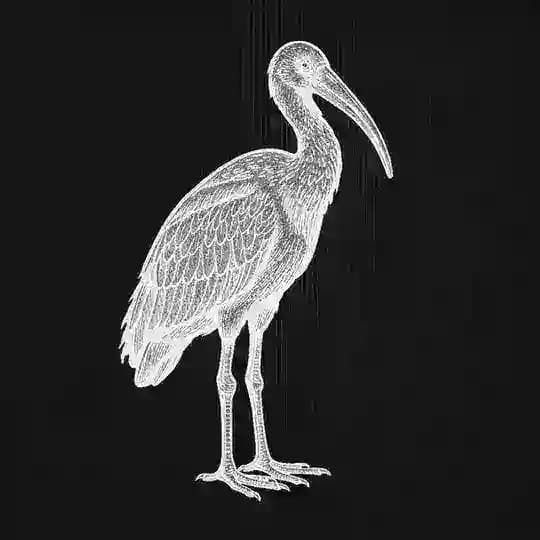
"The prima materia has the quality of ubiquity: it can be found always and everywhere, which is to say that projection can take place always and everywhere. The English alchemist Sir George Ripley (c. 1415–90) writes: “The philosophers tell the inquirer that birds and fishes bring us the lapis, every man has it, it is in every place, in you, in me, in everything, in time and space.”
“It offers itself in lowly form [vili figura]. From it there springs our eternal water [aqua permanens].” According to Ripley the prima materia is water; it is the material principle of all bodies, including mercury. It is the hyle which the divine act of creation brought forth from the chaos as a dark sphere (sphaericum opus). The chaos is a massa confusa that gives birth to the stone.
The hylical water contains a hidden elemental fire. In the treatise “De sulphure” hell-fire (ignis gehennalis) is attributed to the element earth as its inner opposite. According to Hortulanus, the stone arises from a massa confusa containing in itself all the elements. Just as the world came forth from a chaos confusum, so does the stone.
The idea of the rotating aquasphere reminds us of the Neopythagoreans: in Archytas the world-soul is a circle or sphere; in Philolaos it draws the world round with it in its rotation. The original idea is to be found in Anaxagoras, where the nous gives rise to a whirlpool in chaos. The cosmogony of Empedokles is also relevant: here the σϕαīρος (spherical being) springs from the union of dissimilars, owing to the influence of ϕιλία.
The definition of this spherical being as “the most serene God,” sheds a special light on the perfect, “round” nature of the lapis, which arises from, and constitutes, the primal sphere; hence the prima materia is often called lapis. The initial state is the hidden state, but by the art and the grace of God it can be transmuted into the second, manifest state.
That is why the prima materia sometimes coincides with the idea of the initial stage of the process, the nigredo. It is then the black earth in which the gold or the lapis is sown like the grain of wheat. It is the black, magically fecund earth that Adam took with him from Paradise, also called antimony and described as a “black blacker than black” (nigrum nigrius nigro).
As the grain of fire lies concealed in the hyle, so the King’s Son lies in the dark depths of the sea as though dead, but yet lives and calls from the deep: “Whosoever will free me from the waters and lead me to dry land, him will I prosper with everlasting riches.”
— C. G. Jung, CW 12, Psychology and Alchemy
Art: Mercurius, standing on the round chaos, holding the scales which signify the pondus et mensura.
The rotundum is a prefiguration of the gold.
Lapidis Philosophorum, Ms. Warburg. FGH 100