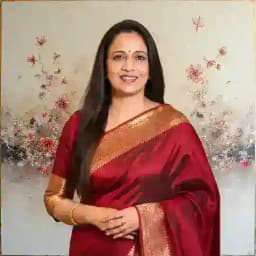
Part 2 of Q&A with Wee Leng (NUS Life Sciences Class of 2024 Valedictorian, currently pursuing a PhD in Duke-NUS Medical School)
Q: I have no idea what I want to do after graduation. What should I do?
You are definitely not alone! The best approach is to get exposed to as many things as possible, and as early as possible! I recently met JC and poly students at a networking session with scientists and also in a career workshop so it is really never too early (and never too late) to explore. Life Sciences opens many doors (even outside of science), so don’t limit yourself!
One concept that really helped me came from my mentor, Dr. Wee Shiou Liang, during the NUS FoS Alumni–Student Mentorship Programme: the idea of Ikigai (your reason for being). It sits at the intersection of what you love, what you are good at, what the world needs, and what you can be paid for.
As a start, you can try the online quiz: https://ikigaitest.com/ https://ikigaitest.com/ or read the book ‘Ikigai: The Japanese Secret to a Long and Happy Life’ https://books.google.com.sg/books/about/Ikigai.html?id=MDksDwAAQBAJ
Q: How do I know if I want to pursue a PhD / research career?
In my opinion, you might be suited for a PhD if you enjoy asking questions that no textbook can answer, and you are motivated by the idea that your work could one day improve or even save lives. I once came across an analogy that beautifully summarises the meaning of a research career: “Medicine saves the village from the flood, only for the waters to return year after year. Research, on the other hand, builds the dam so the village does not have to fear the river forever.”
For me, research became meaningful when I realised that behind every experiment is a real person and a family hoping for a better life. If the unknown excites you more than it scares you, and you find purpose in bridging science with compassion, then a research path may be worth exploring!
Q: Should I take a gap year before starting a PhD?
It is not compulsory, but it can be very beneficial.
As undergraduates, we often think like students, focusing on modules, grades, and deadlines. A PhD, however, is much closer to a full-time research career, with expectations of independence, resilience, and long-term project ownership. Taking a gap year to work as a Research Assistant helped me to:
- develop confidence and technical skills at the bench,
- clarify my research interests I genuinely care about,
- confirm whether I enjoy the day-to-day reality of research (e.g., experiments that fail, troubleshooting, reading, lab meetings),
- build a stronger and more informed PhD application, and
reflect on my personal and career goals before committing to a long PhD journey.